
Nature Spirits in Indigenous Spirituality

Quick summary
Nature spirits are at the heart of Indigenous spirituality, representing protective forces and profound teachings. Through totems and the elements, discover how these entities guide daily life and maintain the sacred balance between humanity and Mother Earth.
Nature spirits hold a fundamental place in the culture and spirituality of Indigenous peoples of North America. Represented on totems and other artistic forms, these spirits embody the forces of nature and the elements, playing a vital role in community rites and beliefs. These spiritual entities are not merely symbols; they embody regenerative powers, profound teachings, and protective forces that influence daily life. By venerating these spirits, Indigenous peoples honor the sacred connection that binds them to the Earth and the universe.
Nature Spirits Represented on Indigenous Totems
Totems, often carved from wood, serve as a means to honor nature spirits. They tell stories and symbolize the relationship between humans and natural forces. Here is a description of some of these spirits and their significance in Indigenous spirituality:
1. The Spirit of Water
The spirit of water represents rivers, lakes, oceans, and rain. It embodies purification, fluidity, and regeneration. Water is a source of life, and for many Indigenous nations, it symbolizes abundance and renewal. The spirit of water helps purify both body and mind, thus ensuring a healthy connection with nature and other living beings.
2. The Spirit of the Forest
The spirit of the forest embodies fertility, growth, and the protection of living beings. The forest is seen as a source of abundance, offering medicinal plants, animals, and wood. Indigenous people believe that this spirit watches over all beings in the forest and is essential for maintaining the balance between humans and their environment.
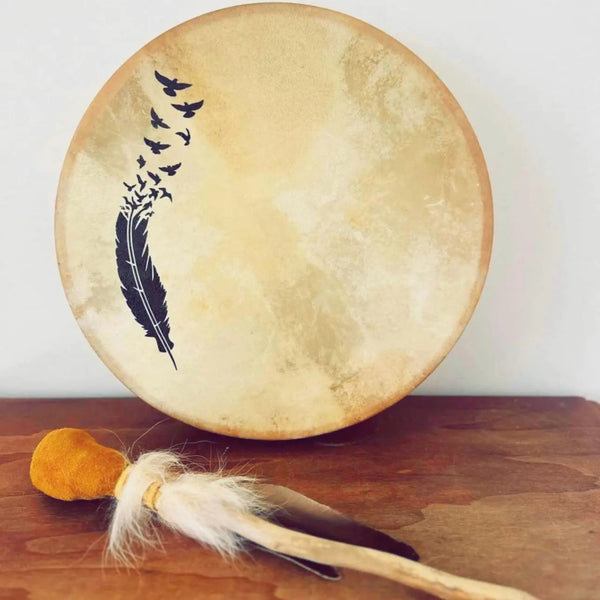
Drums carrying presence and resonance
Handcrafted creations that evoke rhythm, listening, and presence.
Powerful artisanal works, designed to inhabit a space and accompany an inner journey.
View drums3. The Spirit of the Mountain
The mountain is often perceived as a sacred place where the spirit of the mountain resides, representing stability and spiritual strength. This spirit also symbolizes connection with spiritual heights and the world of ancestors. It is a place of meditation and contemplation.
4. The Spirit of the Wind
The spirit of the wind is associated with transformation and freedom. The wind is seen as a messenger, capable of moving clouds, bringing rain, or scattering seeds. In rituals, this spirit is often invoked to bring change or purify the ambient air.
5. The Spirit of Fire
Fire, an element both destructive and purifying, symbolizes passion and creativity. Often associated with healing ceremonies, fire is used to burn sacred herbs such as sage and cedar, thus purifying spirits.
6. The Spirit of the Earth
The spirit of the earth is the guardian of Mother Earth. It represents fertility, wisdom, and stability. Indigenous peoples venerate this spirit as a benevolent entity that supports life and provides everything peoples need to survive.
7. The Spirit of the Sky
The sky, a place of light and guidance, is represented by the spirit of the sky. Associated with the sun, moon, and stars, this spirit embodies vision, spiritual clarity, and divine guidance.
8. The Spirit of the Aurora Borealis
The aurora borealis is associated with magic and mystery. It is often perceived as a manifestation of ancestral spirits, reminding people to keep their faith in the supernatural.
9. The Spirit of the Night
The spirit of the night embodies tranquility and reflection. Night is a sacred time for introspection, allowing a deeper connection with oneself and the spiritual world through dreams.
10. The Spirit of the Moon
The spirit of the moon is linked to natural cycles, regulating tides and life phases. Representing femininity and intuitive wisdom, it guides spirits through periods of change.
Importance of Nature Spirits in Indigenous Cultures
Nature spirits are revered for their role in maintaining harmony between humans and nature. They represent protective forces and ancestral teachings that ensure the physical and spiritual survival of communities. Their representation on totems allows these fundamental values to be transmitted to future generations.
Conclusion
Nature spirits illustrate the deep and respectful relationship Indigenous peoples have with their environment. By understanding their meaning, we appreciate the spiritual richness of communities and the importance of protecting the sacred bonds that unite humanity with nature.
The animal spirit guides the artisan in the choice of materials and sacred forms.
Deepen what you feel
Certain objects accompany an inner journey. Choose the one that resonates with your intention.


Discover more creations
Two handmade pieces selected from our world of creations.


