
Indigenous legend: the raven and the light of the world

Quick Summary
In several Pacific Northwest Coast stories, Raven plays the role of a transformer and light-bringer. A famous Tlingit tradition tells how, while the world was plunged in darkness, he used transformation and cunning to reach the light kept out of reach of other beings and release it into the world.
There was a time when the world did not yet know the light of day.
The Earth remained in darkness. Beings lived without seeing the world as we know it today, while somewhere, far from them, the light already existed.
But it was guarded.
The world before the light
In an ancient Tlingit tradition, the world was plunged into darkness.
Far away lived a powerful being who possessed what no one else could reach: the light.
In different versions of the story, the sun, moon, stars, or the light of day are kept in precious containers inside his dwelling.
Raven knew that this light existed.
He also knew that it could transform the world.
But he could not simply enter the house and take it.
He had to find another way to achieve it.
Raven changes form
Raven was a being capable of transformation.
Rather than confronting the guardian of the light directly, he decided to use cunning.
In a Tlingit version of the story, he transformed himself into a tiny hemlock needle and dropped into the water that the guardian’s daughter was drinking.
Without knowing it, she swallowed him.
Some time later, she gave birth to a child.
This child was Raven in a new form.
He grew up in the house where the things he had come to seek were kept.
And the child's grandfather became deeply attached to him.
The child who wanted the light
Raven could now see up close what had been hidden from the rest of the world.
He knew the precious containers were there.
So the child began to ask for them.
He would cry and insist until his grandfather finally gave in.
In some versions, Raven first obtains the stars.
When he can finally touch them, they are released and reach the sky.
Then he asks for the moon.
It too eventually escapes and takes its place in the night sky.
But Raven had not yet obtained what he desired most.
He wanted the light of day.
The box of light
Raven continued to cry and demand this final treasure.
His grandfather resisted as long as he could.
This light was too precious.
But facing the insistence of the child he loved, he eventually allowed him to approach it.
Raven now had what he had come to seek.
He abandoned his child form and became Raven once again.
Then he carried the light far from the house where it had been kept.
Raven releases the light
Raven flew to the places where beings still lived in darkness.
In an ancient Tlingit version, he encountered people who were fishing in the dark.
They had heard of something called daylight, but they had never seen it.
Raven opened the container slightly.
A first glimmer shot out.
Then he opened it completely.
For the first time, the light spread everywhere.
The waters, the mountains, the trees, and the faces appeared in the daylight.
What already existed in the darkness could now be seen.
And the light never returned to its container.
Since that day, the light belongs to the world
Raven had not created the light.
He had made it accessible.
Through his transformations, his intelligence, and his ability to bypass obstacles, he had changed the world forever.
The sun, the moon, the stars, and the light could now illuminate the beings who lived on Earth.
And that is how, in the stories passed down through generations, Raven became one of the great transformers associated with light and the changes of the world.
A legend passed down in different forms
There is no single version of the story of Raven and the light.
Related stories have been passed down among several peoples of the Pacific Northwest Coast, notably in Tlingit and Haida traditions.
The details may vary according to the people, the community, the storyteller, and the era.
- The light: some versions speak of daylight, while others distinguish between the sun, the moon, and the stars.
- Transformation: Raven can take different forms to manage to enter the dwelling where the light is kept.
- The child: in well-known Tlingit versions, Raven is reborn as the grandson of the light’s guardian.
- The release: the story results in an irreversible change to the world when the light becomes accessible to other beings.
Raven, transformer and trickster figure
Raven is much more complex than a simple hero.
In Northwest Coast stories, he can be intelligent, cunning, curious, unpredictable, and sometimes motivated by his own desires.
It is precisely this complexity that gives his stories so much strength.
He transforms the world not because he fits a perfect image of wisdom, but because he acts, experiments, transgresses boundaries, and provokes change.
In the legend of the light, his cunning finally allows something that was kept by a few to become accessible to all.
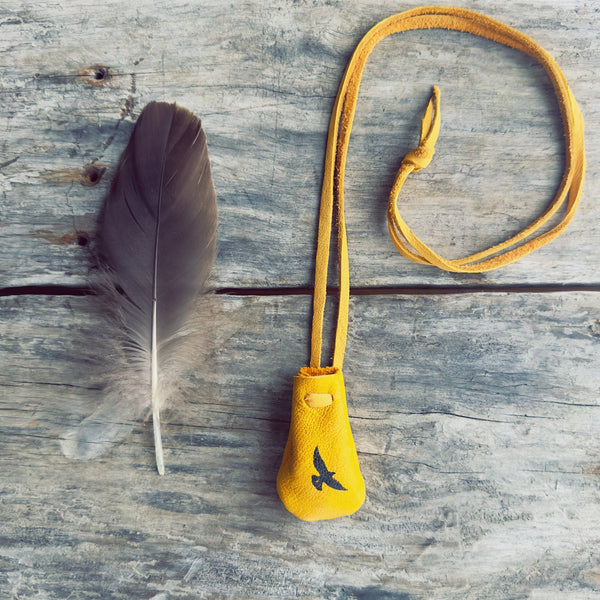
The significance of Raven in this legend
The story of Raven and the light can be read as a tale of transformation and change.
Raven refuses for the world to remain as it is.
He discovers that something essential is kept out of reach of others and seeks a way to access it.
His strength does not rely on physical power.
It relies on his ability to observe, change form, understand those around him, and find a path where no obvious path exists.
The light thus becomes the result of a transformation: after he passes through, the world can no longer return entirely to what it was.
Light as knowledge
Light occupies a central place in the story because it allows us to see what was already present but remained hidden in the darkness.
This image can naturally evoke discovery, understanding, and the transition from one state to another.
But the richness of the legend also lies in the fact that Raven does not keep this transformation only for himself.
Once released, the light belongs to the world.
It illuminates the beings, the waters, the territory, and everything that was invisible until then.
A story that continues to live
Raven remains an important figure in many artworks and artistic traditions of the Pacific Northwest Coast.
The story of the light also continues to be told, interpreted, and represented by contemporary Indigenous artists.
Each version may carry its own way of recounting the events, but the power of the image remains: a world plunged in darkness, a being capable of transforming itself, and a light that eventually is released.
Conclusion
The legend of Raven and the light tells of much more than a simple theft.
It tells of an irreversible change.
Through transformation and cunning, Raven manages to reach what was hidden and release something that will modify the life of all beings.
Since then, in the stories where this history is passed down, every sunrise can recall that ancient moment when the light ceased to belong to a few and began to illuminate the world.
Discover more creations
Two handmade pieces selected from our world of creations.


