
The Legend of the Raven Who Stole the Light

Quick Summary
A central figure in Northwest Coast cultures, the Raven is a transformer and a bridge between worlds. This ancestral legend tells how, through cunning and audacity, he freed the sun, moon, and stars to offer them to humanity. A powerful narrative about sharing, responsibility, and the necessary circulation of light among living beings.
The Raven and the Stolen Light
Cultural Summary and Context
In the Indigenous cultures of the Pacific Northwest Coast — particularly among the Haida, Tlingit, Tsimshian peoples, and several First Nations of British Columbia and Alaska — the Raven holds a central place in traditional narratives.
He is not merely a bird.
He is an ancient being, a transformer, a bridge between worlds.
In many stories passed down through generations, the Raven is the one who shapes, disturbs, and challenges the established order. He can be cunning, unpredictable, sometimes selfish, but he always acts in the movement of creation.
One of the most well-known myths tells how the Raven stole the light to give it to the world, freeing the sun, moon, and stars.
This narrative is not just a cosmic story.
It speaks of sharing, power, transformation, and responsibility.
The Legend of the Raven Who Stole the Light
There was a time when the world was plunged into total darkness.
Not the gentle night we know.
Not a temporary veil.
An endless darkness.
Rivers flowed without sparkle.
Forests breathed without shadow.
Faces knew neither warmth nor dawn.
Yet, light existed.
But it was locked away.
It is said that a great chief possessed precious boxes containing the sun, moon, and stars. He kept these treasures in his house, refusing to share them with the world.
Humans lived in cold and silence.
The Raven watched.
He saw the injustice.
He saw the children stumble in the shadows.
He saw the elders reach out their hands to an empty sky.
The Raven was known for his cunning.
He could change his form.
One day, he transformed into a thin pine needle and let himself fall into the water a young girl was about to drink. The young girl swallowed the needle without knowing.
Soon after, she gave birth to a child.
That child was the Raven.
He grew up in the chief's house.
And like all children, he cried.
He cried until he was given the luminous boxes to play with.
The grandfather gave in.
First the box of stars.
Then that of the moon.
Finally that of the sun.
As soon as the last box was opened, the Raven returned to his true form.
He seized the light.
He soared towards the roof of the house, passed through the smoke of the hearth, and flew into the still dark sky.
The chief cried out.
The wind rose.
But it was too late.
The Raven opened the boxes.
The stars scattered across the sky.
The moon found its place in the night.
The sun rose on the horizon.
For the first time, light touched the earth.
Mountains revealed their contours.
Rivers sparkled.
Humans looked up and saw.
It is said that the smoke from the hearth blackened the Raven's feathers as he escaped. Once white, he became black forever.
But he never regretted his action.
Light was not meant to be possessed.
It was meant to circulate.
Conclusion
The Raven is not a perfect hero.
He is complex, unpredictable, sometimes cunning, but profoundly transformative.
In the traditions of the Northwest Coast, he reminds us that light is not a privilege to possess, but a responsibility to share. He teaches that change can arise from a daring act, and that even those who are underestimated can bring the world to greater clarity.
This legend leaves us with a simple question:
what do we do with the light we receive?
Some choose to transmit it through words.
Others through actions.
Still others through objects imbued with intention.
In many Indigenous cultures, handmade objects are not merely decorative. They become living reminders. A symbol of transformation. A memory carried close to the heart. A silent commitment to walk with awareness.
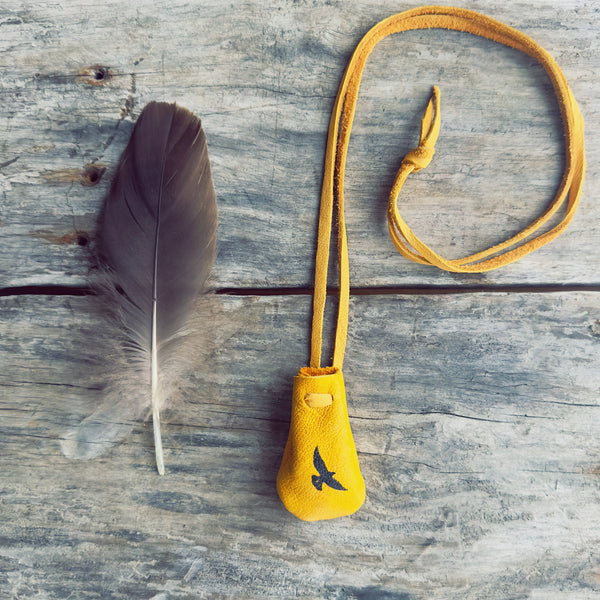
Wearing an object inspired by these teachings — whether it's a medicine bag, an animal symbol, or an artisanal creation — is not a simple purchase.
It is a way to anchor an intention.
A way to keep the light circulating.
As the Raven once did.
And sometimes, all it takes is a small object, held with respect, to remember that light was never meant to be locked away.
Go deeper into what you feel
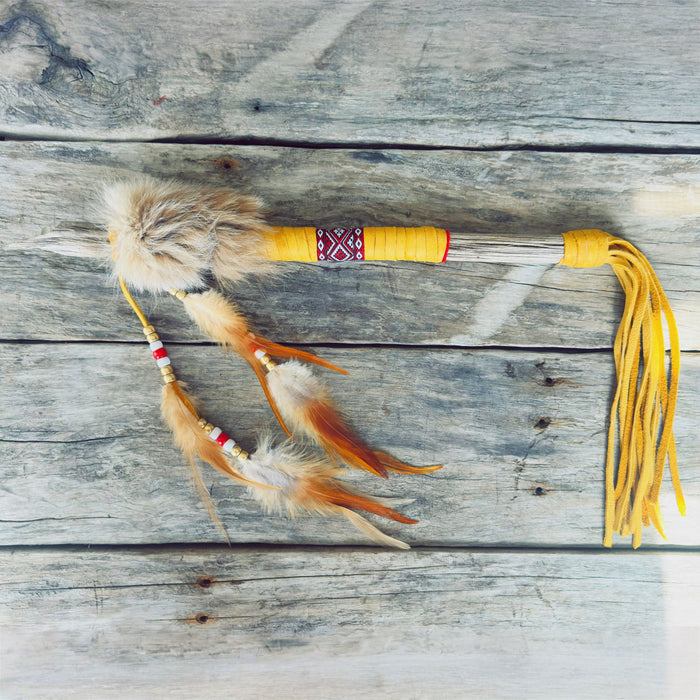
Some creations naturally extend the energy of what you have just read.

Frequently Asked Questions
Where does the legend of the Raven that steals the light come from?
What does the raven symbolize in indigenous cultures?
Why is the Raven black in the legend?
- Choosing a selection results in a full page refresh.
- Opens in a new window.